
Islamic Dream Interpretation
Discover the meanings of dreams through authentic Islamic teachings and classical scholars. Get clear, faith-based interpretations to understand the spiritual messages and symbols in your dreams.
Classical Islamic Scholarship
Islamic Dream Interpreter
Based on Ibn Sirin, Al-Nabulsi & Sahih Hadith. Type or click any dream below for an instant detailed interpretation.
✦
20 Common Islamic Dreams — Click any for instant interpretation
✦
Minimum 10 characters
0/2000 — limit reached
Dream Received
Dream Interpretation
Islamic Sources
Note: This tool provides spiritual insights based on classical Islamic sources (Ibn Sirin, Al-Nabulsi). For personal religious rulings, please consult a qualified Islamic scholar.

Dreams have fascinated human beings since the dawn of civilization, but few traditions have approached them with as much depth, structure, and spiritual seriousness as Islam. Whether you have seen vivid visions in the night and wondered what they signify, or you are simply curious about how Muslims understand the world of sleep, this guide offers a thorough and authentic exploration of dream interpretation in Islam.
Drawing on the Quran, the Hadith, and the enduring scholarship of the great dream interpreter Ibn Sirin, this article unpacks the theological foundations, the practical rules, and the living wisdom that have shaped Islamic thought on dreams for over fourteen centuries.
By the time you finish reading, you will know not just what Muslim scholars say about dreams, but why those teachings matter and how they can bring clarity to your own dream experience.
What Is Islamic Dream Interpretation and Why Does It Matter in the History of Islam?
Islamic dream interpretation is a branch of Islamic scholarship concerned with understanding the symbolic messages conveyed during sleep. Unlike folk superstition or the approach proposed by modern psychologists, the Islamic tradition treats dreams as a potential channel of divine communication one that must be approached with discernment, knowledge, and humility before Allah.
In the history of Islam, dreams have played a remarkable role. The Quran itself narrates the story of the Prophet Yusuf (Joseph), whose gift of dream interpretation became the means by which Allah’s plan for an entire nation was revealed. The vision of eleven stars and the sun and the moon prostrating before Yusuf launched a saga of trial, faith, and ultimate vindication that Muslims still reflect on today. This Quranic episode established, once and for all, that the interpretation of dreams is not mere entertainment it is a form of prophetic knowledge.
For ordinary Muslims, dreams remain one of the most accessible forms of spiritual perception available after the era of prophethood has closed. The Prophet Muhammad (PBUH) taught his companions that nothing of prophethood remains except glad tidings, and these glad tidings are good dreams seen by a righteous person or seen for him. This single narration, preserved in the Sahih collections, elevated dream interpretation to a subject of genuine religious importance.
What Are the Three Types of Dreams in Islam?
One of the most important contributions of Islamic scholarship is its careful taxonomy of the dream experience. Rather than treating all dreams equally, Muslim scholars identified three types of dreams, each with a distinct origin and therefore a distinct weight.
The first is the true dream, which is described as coming directly from Allah. These dreams are typically clear, peaceful, and consistent with Islamic values.
They may carry direct symbolic meaning or arrive as straightforward visions of future events. The Prophet SAW described such a dream as one forty-sixth part of prophethood a staggering claim that underlines their sacred potential.
The second type of dream comes from within the dreamer’s own soul, reflecting the dreamer’s daily prayers, worries, desires, and memories. These dreams carry no special prophetic significance and require no interpretation. The third and most dangerous type of dream is the one sent by Shaytaan the open enemy of humanity.
Such dreams aim to frighten, confuse, or lead the believer astray, and the Prophet (PBUH) instructed Muslims who experience bad dreams to seek refuge with Allah, spit lightly to the left three times, and turn to the other side.
Understanding which type of dream one has received is the very first task of any serious interpretation in Islam. A dream interpreter who skips this discernment risks offering guidance on something that deserves to be forgotten rather than analyzed.
How Did the Prophet Muhammad (PBUH) and the Companions Interpret Dreams?
The Sunnah is filled with accounts of the Prophet Muhammad and his companions engaging seriously with dreams. The Prophet himself had many prophetic dreams before and during his mission, and he encouraged his companions to narrate their dreams to him at the fajr prayer so he could comment on them. This practice turned the early Muslim community into a living laboratory of dream experience.
One of the most celebrated companions in this regard was Abu Bakr, the closest friend of the Prophet and first Caliph of Islam. Abu Bakr developed considerable skill as a dream interpreter, and on at least one occasion the Prophet corrected his interpretation, showing both that the art could be learned and that it could be refined.
The hadith and the Qur’an together provide the foundational material from which all later scholars built their theories, and it is significant that the Prophet never dismissed dream interpretation as superstition instead, he modeled careful, thoughtful engagement with it.
These Prophetic practices gave dream interpretation in Islam a sunnah-based legitimacy that has never been seriously challenged within mainstream Islamic thought. Whether one belongs to a traditional legal school or follows a more Sufi orientation, the prophetic example remains the gold standard against which all dream interpretation theories and observations must be measured.
Who Was Ibn Sirin and What Made Him the Most Popular Dream Interpreter in Islamic History?
No discussion of Islamic dream interpretation would be complete without an extended consideration of Muhammad ibn Sirin, the eighth-century scholar from Basra whose name has become almost synonymous with the art.
Ibn Sirin was a student of the companions of the Prophet, a scholar of hadith of the highest caliber, and a man renowned for his piety and extraordinary spiritual perception.
His work on dream interpretation was so comprehensive and so carefully grounded in Islamic sources that it became the foundational text of the field a kind of dream dictionary that Muslim scholars have consulted, quoted, and built upon ever since.
What distinguished Ibn Sirin from less rigorous practitioners was his insistence that interpretation must be grounded in the Quran, the Sunnah, the Arabic language, and the life circumstances and personal characteristics of the dreamer. He rejected any approach that ignored context, familiarity, or the moral state of the person dreaming.
A dream about water, for example, might mean knowledge, sustenance, or trial and only by knowing the dreamer could an interpreter choose wisely among these possibilities.
Ibn Sirin is credited with the insight that a single dream can yield multiple valid interpretations, and that the first interpretation offered often carries special weight because it sets the dreamer’s expectation in motion.
This was not superstition but a sophisticated recognition that meaning unfolds within a relational context between the interpreter, the dreamer’s soul, and the unseen. His legacy survived as authentic Islamic scholarship precisely because he never claimed knowledge that belongs only to Allah.
How Do Quranic Stories Shape Dream Interpretation in Islam?
The Quran’s treatment of dreams is not incidental it is central to two of its most extended narrative arcs. The story of Yusuf in Surah Yusuf is explicitly described as the best of stories (ahsan al-qasas), and at its heart is the gift of dream interpretation that Allah granted to Yusuf and his father Yaqub before him.
The Quranic account of Yusuf interpreting the dreams of his fellow prisoners and later the king of Egypt established several enduring principles: that true interpretation comes as a divine gift, that it may remain hidden until its appointed time, and that the meaning of the dream may unfold across years rather than days.
The second major Quranic treatment appears in the story of Ibrahim, who dreamed that he was sacrificing his son. This dream understood by both Ibrahim and his son Ismail as a divine command illustrates the category of the true dream most vividly.
It also shows that prophetic dreams demand action, not merely reflection. Quranic references to dreams thus carry considerable theological freight, situating dream interpretation as an activity connected to prophethood, divine will, and human obedience.
For Muslims engaging with a dream dictionary or seeking the opinion of an imam or scholar, these Quranic anchors provide the interpretive frame. Every good dream points, however indirectly, back to the mercy and wisdom of Allah. Every bad dream is a reminder of the enmity of Shaytaan and the importance of seeking divine protection through the sunnah.
What Are the Rules and Etiquettes of Islamic Dream Interpretation?
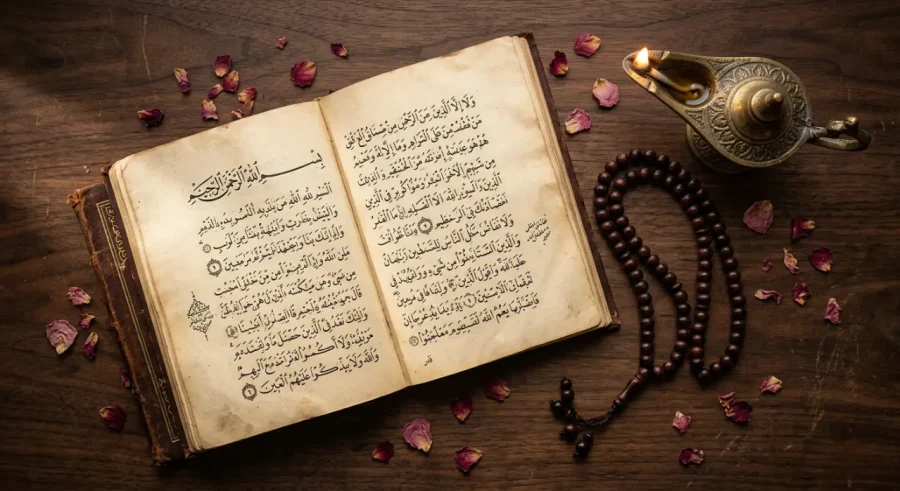
Authentic Islamic scholarship has developed a rich set of rules governing how dreams should be shared, interpreted, and acted upon. These rules protect both the dreamer and the community from the harm that can come from hasty or uninformed interpretation.
The first and most important rule is that one should only share a dream with someone who is knowledgeable, trustworthy, and well-wishing not with every curious acquaintance.
Ibn Sirin himself was reported to ask several questions before offering any interpretation: Who are you? What is your profession? What is your current situation? This reflects the understanding that the meaning of the dream is always partly a function of who the dreamer is.
The second major rule is that bad dreams should not be narrated at all. When shaytaan sends a disturbing vision, the correct response is to wake up, seek refuge with Allah by saying Audhu billahi min ash-shaytaan ir-rajeem, and not share the dream with anyone.
This prevents the dream from taking hold in the imagination and spreading anxiety. Spitting lightly (a symbolic gesture involving saliva blown to the left side) is also recommended as a sunnah practice.
A third and often overlooked rule is that the interpreter should never claim certainty about a meaning that Allah has not revealed directly. The great scholar of tafsir and Islamic law would routinely say “I think this means…” or “It seems to me…” rather than asserting a definitive interpretation.
This epistemic humility is one of the hallmarks that separates classical Islamic scholarship on dreams from both popular fortune-telling and the more speculative recent theories advanced in non-Islamic contexts.
How Does Islamic Dream Interpretation Differ From the Approach Proposed by Modern Psychologists?
One of the most revealing contrasts in the study of dreams is between the Islamic tradition and the approach proposed by modern psychologists such as Freud and Jung. For Freud, dreams are the royal road to the unconscious a space where repressed desires surface in disguised form.
For Jung, dreams carry archetypal symbols that connect the individual to a collective unconscious shared by all humanity. Both frameworks are entirely naturalistic: dreams come from within, and their meaning points back inward to the psychology of the individual.
Islamic dream interpretation theories, by contrast, operate on a different ontological plane. While Islam does acknowledge the category of dreams that come from within what might loosely align with the psychological view it situates this category as only one of three types.
The existence of divine dreams and demonic dreams means that reductive psychological analysis, however sophisticated, is insufficient. Dreams are not merely data points about the dreamer’s mental state; they may be messages, warnings, or even divine communications of the highest order.
The practical implications of this difference are significant. A Muslim who sees a disturbing dream is not primarily encouraged to explore its psychological meaning through self-analysis. Instead, the tradition offers a clear protocol: recognize the source, seek protection, and if necessary consult a trustworthy interpreter.
The psychological and spiritual importance of dreams in Islam is inseparable, and the traditions governing them reflect a worldview in which the unseen realm is as real as the material one.
What Symbols Are Most Commonly Found in the Islamic Dream Dictionary?
Classical Islamic scholars compiled extensive symbol-lists based on the Quran, the hadith, the Arabic language, and accumulated interpretive experience. These compilations of which Ibn Sirin’s is the most famous form what we might call the Islamic dream dictionary: a reference guide that links particular images to their most likely spiritual meanings within an Islamic context.
Water, for example, is among the most symbolically rich images in the Islamic tradition. It can represent knowledge, sustenance, life, or in some contexts, trial and difficulty, depending on whether it is clear or murky, flowing or stagnant, overwhelming or gentle.
Gold in dreams is often interpreted as a warning for men but as good news for women, based on hadith-derived principles. Seeing the Prophet Muhammad (PBUH) in a dream is considered a genuine encounter the Prophet taught that Shaytaan cannot appear in his form and such a dream from Allah is typically understood as a source of great blessing and guidance for the dreamer’s life.
The sun and the moon appear in many significant dreams throughout Islamic history, including the dream of Yusuf. In classical interpretation, the sun often represents a powerful ruler or father figure, while the moon may represent a mother, a scholar, or a leader of a more reflective and guiding nature.
The meaning of the dream always depends on the full context, the dreamer’s circumstances, and the skill of the interpreter — which is why Ibn Sirin insisted that a dream interpreter must combine wide knowledge with deep personal insight.
How Should Muslims Today Approach Dream Interpretation in Islam?
For contemporary Muslims, the challenge is to engage seriously with this rich tradition without falling into superstition or over-reliance on lay interpretation. The first recommendation of classical scholars remains sound: most dreams do not require interpretation.
The dream which causes no disturbance, carries no vivid imagery, and leaves no lasting impression is almost certainly a fragment of daily mental processing rather than a divine message. When a dream does feel significant when it is vivid, emotionally powerful, internally coherent, and leaves a lasting impression upon waking the sunnah suggests several steps.
First, praise Allah, since a good dream is from Allah. Second, if it was a bad dream, seek refuge with Allah and do not share it. Third, if you believe the dream may carry meaning, consult a learned and trustworthy interpreter ideally someone with knowledge of the Quran, the hadith, and the classical tradition, rather than merely a popular dream interpreter with a social media following.
The dreamer’s own moral state matters too. Muslim scholars have consistently taught that righteous people tend to have clearer and more reliable dreams, while those who are neglectful of their daily prayers or engaged in sin may find their dreams more confused and less spiritually meaningful.
This is not a judgment but an observation rooted in the understanding that the heart’s clarity directly affects its receptivity to divine light. Keeping the heart clean, through worship, repentance, and sincere intention, is itself a form of preparation for the gift of dream interpretation.
What Are the Most Important Lessons From Islamic Dream Interpretation Theories and Observations?
The breadth of Islamic scholarship on dreams from the Quranic narratives to the hadith collections to the magisterial works of Ibn Sirin and the later Sufi commentators yields a set of enduring lessons that transcend any single culture or era.
Perhaps the most important is that not all dreams are equal. Treating every dream as equally meaningful leads either to paralysis or to the abdication of rational judgment. The threefold taxonomy divine, personal, demonic provides an essential filter.
The second great lesson is that context is everything. The same image can carry radically different meanings depending on who dreams it, when, and in what emotional and spiritual condition. This is why the tradition has always emphasized consulting qualified scholars rather than relying on generic symbol-lists alone. A dream dictionary is a starting point, not an ending point.
Finally, Islamic dream interpretation teaches humility. Allah alone has perfect knowledge of the unseen, and even the greatest dream interpreter operates under divine permission and human limitation. The purpose of dream interpretation in Islam is never to claim certainty about the future or to manipulate others it is to draw closer to Allah, to heed divine guidance, and to walk with greater awareness through the mystery of human life.
Key Takeaways: What to Remember About Islamic Dream Interpretation
- Islam recognizes three types of dreams: those from Allah (true dreams), those from within the self, and those from Shaytaan — and each requires a different response.
- The Quran tells the story of Yusuf as the supreme model of the gift of dream interpretation, rooted entirely in divine guidance.
- Ibn Sirin (Muhammad ibn Sirin) is the most authoritative classical scholar of dream interpretation; his principles require knowledge of the Quran, the Sunnah, the Arabic language, and the dreamer’s personal circumstances.
- Bad dreams should not be narrated; one should seek refuge with Allah and turn to the other side when experiencing them.
- Good dreams are considered glad tidings and a fragment of prophethood remaining after the Prophet’s passing.
- Context and the dreamer’s moral state are essential to any valid interpretation — a symbol means different things to different people.
- Islamic dream interpretation differs fundamentally from the approach proposed by modern psychologists because it acknowledges a divine and a demonic dimension, not merely a psychological one.
- Always consult a knowledgeable and trustworthy interpreter; avoid sharing significant dreams carelessly or with unqualified individuals.
- The Hadith and the Qur’an together form the only reliable foundation for authentic Islamic dream interpretation — everything else must be measured against these sources.
- Ultimately, humility before Allah is the first and last requirement: interpretation is a tool for guidance, never a claim to divine knowledge.
Frequently Asked Questions About Islamic Dream Interpretation
Can Women’s Dreams Be Interpreted the Same as Men’s in Islam?
Yes, with contextual adjustments. My Islamic interpretation of dreams — whether for a man or woman — follows the same three-type classification and the same Ibn Sirin methodology. However, certain symbols are gender-contextualised by the scholars.
A woman dreaming of giving birth, for example, is interpreted more literally in terms of new beginnings, family matters, or provision. Ibn Sirin and Al-Nabulsi both recorded gender-specific interpretations for symbols related to adornment, pregnancy, nursing, and household matters.
What Does It Mean to See the Prophet ﷺ in a Dream?
This is a Ru’ya by definition. The Prophet ﷺ said: “Whoever sees me in a dream has truly seen me, for Shaytaan cannot assume my form.” (Bukhari). Seeing the Prophet ﷺ in a dream is a great blessing and is considered glad tidings.
The specific meaning depends on what happened in the dream if the Prophet ﷺ smiled, spoke, or pointed toward something; scholars interpret each element within the context of the dreamer’s life. This experience should be cherished, kept private, and reflected upon with gratitude.
Does Dreaming About Death Mean Someone Will Die?
No. This is among the most common fears and most commonly misunderstood symbols in dream interpretation according to Islam. As established in the Ibn Sirin methodology, death in a dream is almost always symbolic, not predictive.
It most commonly represents: a major life transition, the end of a difficult chapter, or a call to repentance. The death of others in dreams can indicate their long life, a change in relationship, or a spiritual message. Fear of literal death from a death dream is a reaction Shaytaan exploits — respond with gratitude to Allah and trust in His decree.
How Long After a Dream Can It Be Interpreted?
Classical scholars noted that interpretation is most accurate when the dream is fresh — ideally interpreted on the same day or within a few days.
Ibn Sirin preferred to interpret a dream while the dreamer still remembered every detail clearly, as details carry meaning. Writing down the dream immediately after waking before speaking to anyone is the most effective practice for preserving its accuracy for interpretation.
Dreams and Their Interpretation in Islam What Scholars Say Today
Contemporary Islamic scholars largely maintain the classical framework established by Ibn Sirin, Al-Nabulsi, and Ibn Kathir. The Permanent Committee for Islamic Research and Fatawa in Saudi Arabia, scholars like Sheikh Ibn Baz and Sheikh Ibn Uthaymeen, and institutions like Al-Azhar University all affirm that:
Dreams and interpretation in Islam remain a valid spiritual science when practiced with proper knowledge and methodology.
The increase in confused, fear-based dream content in modern times is attributed by scholars to increased stress, reduced worship, irregular sleep, and excessive media consumption before sleep — all of which produce Adghath Ahlam.
The solution is spiritual hygiene: consistent salah, Quran recitation, pre-sleep adhkar, and a structured sleep schedule.
Islamic dreams interpretation today is best approached with the same tools scholars always recommended — authentic sources, qualified guidance, honest self-reflection, and a firm understanding that true Ru’ya are a gift from Allah, not a puzzle to be obsessed over.
Use our Islamic dream interpreter tool to get interpretations drawn directly from the works of Ibn Sirin, Al-Nabulsi, and authenticated Hadith — grounded in classical scholarship, adapted to your personal context.
Trusted Refrance: All Hadith references in this article are from Sahih Bukhari and Sahih Muslim unless otherwise noted. Quranic verses are cited by Surah and Ayah number. For scholarly Islamic guidance on personal religious matters, always consult a qualified Islamic scholar. |